




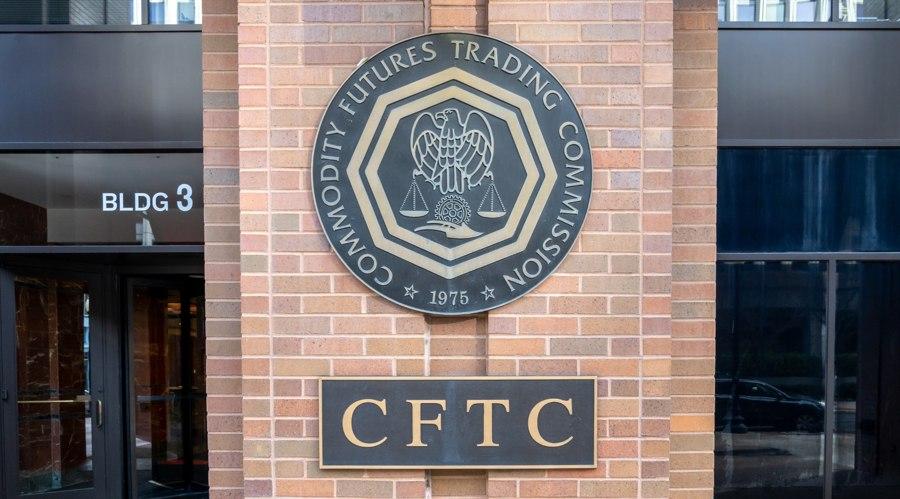
U.S. derivatives regulators have clarified that Bitcoin, Ethereum and certain payment stablecoins may count toward financial-resource requirements for regulated exchanges and clearinghouses, provided their value is adjusted to account for potential risks.
The Commodity Futures Trading Commission (CFTC) issued the staff advisory on November 23, 2026, explaining how cryptocurrency holdings may be considered under existing financial rules.
However, the guidance draws an important distinction between assets used to demonstrate financial resources and those required to meet immediate liquidity obligations.
CFTC outlines treatment of cryptocurrency holdings
The advisory was issued by the CFTC’s Division of Market Oversight and Division of Clearing and Risk.
It applies to three categories of regulated financial infrastructure: swap execution facilities, designated contract markets and derivatives clearing organizations.
These institutions operate trading or clearing systems for financial derivatives, including futures and swaps.
Under existing CFTC regulations, covered entities must maintain sufficient financial resources to cover at least 12 months of operating expenses.
The advisory explains that certain cryptocurrency assets, including Bitcoin, Ether and payment stablecoins, may be included when calculating those resources.
Their value must be adjusted using appropriate discounts, known as haircuts, to account for the risks associated with holding them.
The guidance does not mean every cryptocurrency automatically qualifies or that companies can count their holdings at full market value.
Why financial regulators require haircuts
A haircut is a reduction applied to an asset’s market value when determining how much it can contribute toward a financial requirement.
For example, if an institution holds cryptocurrency worth $10 million and an applicable valuation haircut is 20%, the asset would contribute $8 million toward the relevant calculation.
This is an illustrative example, not a specific haircut rate established by the November 23 advisory.
Such adjustments help account for the possibility that an asset’s value could decline before it is sold or otherwise used to meet financial obligations.
Bitcoin and Ethereum trade continuously, but their prices can change significantly over short periods.
Stablecoins may have lower price volatility when operating as intended, although they introduce other considerations involving reserves, redemption arrangements and issuers.
The appropriate treatment of an asset therefore depends on more than its quoted market price.
Cryptocurrency does not satisfy separate liquidity rules
The CFTC’s advisory makes clear that qualifying cryptocurrency holdings cannot be used to meet a separate requirement involving readily available liquid resources.
Under the accounting treatment discussed by the agency, cryptocurrencies do not qualify as cash or highly liquid securities for that purpose.
This means a regulated entity may be able to count appropriately valued Bitcoin or Ether toward its broader financial-resource requirement while still needing other eligible assets to meet its liquidity obligations.
The distinction is important.
An organization can own valuable assets without necessarily having enough immediately accessible funds to pay operating expenses or other obligations when required.
Selling cryptocurrency may involve market volatility, transaction costs, execution delays or reduced liquidity during periods of financial stress.
For regulators, the ability to convert assets into usable funds is therefore a separate consideration from their overall value.
Guidance applies to specific financial institutions
The advisory concerns CFTC-regulated derivatives market infrastructure rather than every cryptocurrency exchange or digital-asset business operating in the United States.
Swap execution facilities provide venues for certain swaps transactions.
Designated contract markets operate regulated derivatives exchanges, while derivatives clearing organizations manage clearing and associated risk-management functions.
These entities are subject to specific financial-resource requirements intended to support orderly operations and market resilience.
The advisory gives staff’s interpretation of how certain digital assets may be treated under those existing requirements.
It does not establish a general rule allowing all cryptocurrency businesses to substitute Bitcoin or stablecoins for cash.
What the guidance does not establish
The November 23 advisory does not create new regulatory rules or enforceable rights.
The CFTC expressly stated that the document reflects staff views and does not necessarily represent the position of the Commission itself.
It is also not a no-action position, meaning it does not provide a blanket commitment against enforcement.
The guidance does not establish that cryptocurrency holdings are equivalent to cash or that regulators consider all digital assets sufficiently liquid for financial obligations.
Nor does it guarantee that the inclusion of Bitcoin and Ethereum in financial-resource calculations will increase demand for either asset.
Instead, the development provides additional clarity about the treatment of certain cryptocurrency holdings within existing U.S. derivatives-market regulations.
For financial institutions, the key distinction remains between the value of assets held and the availability of resources needed to meet immediate financial obligations.